



Prelude 3 gen 1987-1991












10.00zł
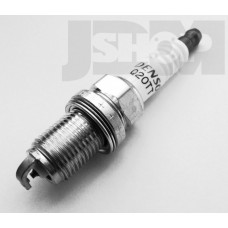
Spark plug Denso Q20TT
The newest technology developed by Denso. In comparison to standard spark Twin Tip technology s..
12.00zł
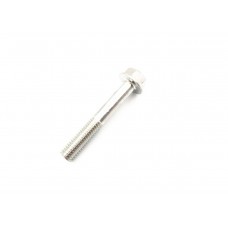
Honda OEM transmission case bolt 95701-08050-00 (8 mm x 50 mm)
The genuine Honda bolt 95701-08050-00 (also written as 95701-0805000) is an OEM fastener used for th..
12.00zł
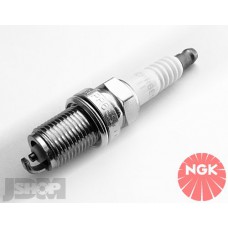
Spark plug NGK BCPR6E-11
Application: D13B1, D14A1, D15B2, D16A2,D16A6, D16A8, D16A9, D16B2, D16Z2, D16Z5, B20A2, B20A3, ..
19.00zł
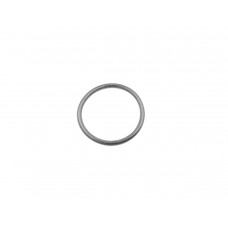
Honda speed sensor O-ring 23.5x2 – 91313-611-010
O-ring speed sensor Honda 23.5x2 – 91313-611-010 Genuine Honda O-ring with dimensions 23.5 x 2 ..
20.00zł
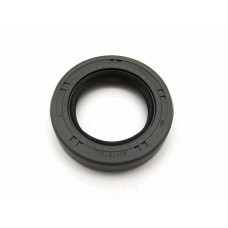
Camshaft seal Honda NOK 27x43x9
Camshaft seal NOK 27x43x9. Application: B20A2, B20A5, B20A7, B20A8 B20B, B20Z D16A3,..
24.00zł
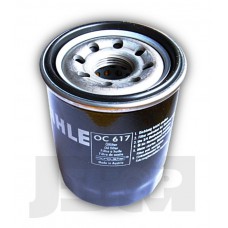
Oil filter Knecht OC617 Honda
OC617 is successor filter OC115. Is used in most gasoline engines Hondas..
26.00zł
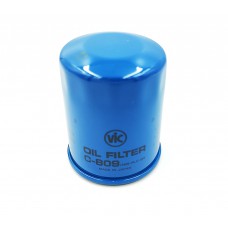
Japanese oil filter Honda Vic C-809
VIC C-809 oil filter – Japanese aftermarket filter for Honda engines The VIC C-809 oil filter i..
27.00zł
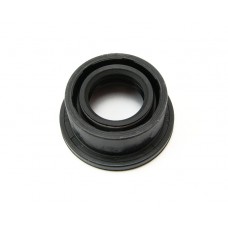
Transmission Oil seal NOK 91215-PK5-000
NOK Honda Manual Transmission Shift Rod Oil Seal Lever Shaft SealReplaces OEM number:91215-PK5-000 ..
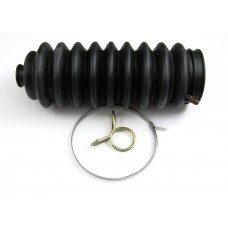
30.00zł
Dust seal Tie Rod Honda Accord Civic Concerto Prelude
Dust sea set. Only for cars with PS. Both sides. For OEM number - 53534-sa5-951 Application:..
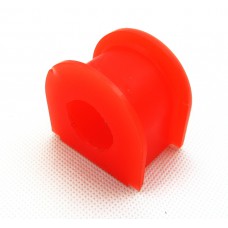
30.00zł
Polyurethane front stabiliser bushing Honda Accord Prelude 0118-80-25.4
Front stabilizer bushing made of polyurethane. Stabilizer diameter - 25,4 mm Replace the or..
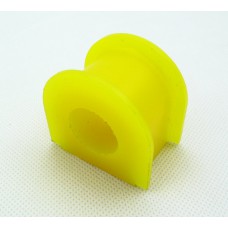
30.00zł
Polyurethane front stabiliser bushing Honda Accord Prelude 0118-85-25.4
Front stabilizer bushing made of polyurethane. Stabilizer diameter - 25,4 mm Hardness - 85 S..
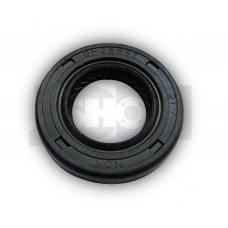
30.00zł
NOK BH3888E Honda distributor oil seal
Distributor oil seal NOK BH3888E.Size 12,5x22,5x5 mm..
35.00zł
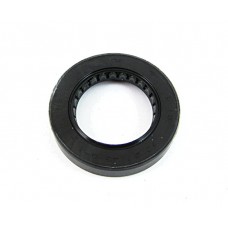
Camshaft seal Honda OEM 27x43x9 91203-PFB-013
Honda OEM camshaft seal 91203-PFB-013 is a genuine 27×43×9 mm cam seal used across many classic Hond..
35.01zł
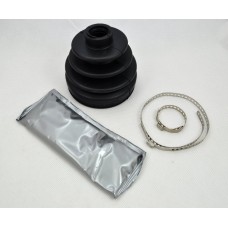
Cover the outer joint Honda Accord Prelude
Application: Honda Accord V gen 93-98 Honda Prelude III gen 87-92 Honda Prelude IV gen 92-..
35.01zł
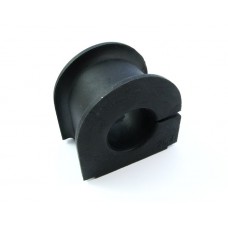
Front stabiliser bushing Honda Accord Prelude
Front stabiliser bushing. Original OEM product - 51306-sm4-010. Apply to: Accord..
Honda Prelude III (1987–1991): A legendary sports coupé and pioneer of mechanical 4WS
Honda Prelude III – a true icon of the late 1980s
The third-generation Honda Prelude, produced between 1987 and 1991 (chassis codes BA4 / BA5), is widely regarded as one of the most advanced and best-handling sports coupés of its time. Combining reliability, sharp design and cutting-edge engineering, the Prelude III quickly became a benchmark among Japanese performance cars.
This generation made history with its innovative 4WS (Four-Wheel Steering) system, which dramatically improved manoeuvrability at low speeds and stability during high-speed cornering. Even today, the mechanical 4WS system is praised for its precision and engineering ingenuity.
Design and bodywork of the Prelude III
The Prelude III was sold exclusively as a 2-door coupé. Its wedge-shaped silhouette, pop-up headlights and low bonnet line created one of the purest aerodynamic designs of the late 1980s. The proportions and balance of the chassis remain highly appreciated by enthusiasts to this day.
- BA4 / BA5 coupé: low centre of gravity and excellent weight distribution for sporty driving.
- 4WS versions: unmatched agility and stability thanks to mechanical rear-wheel steering.
Correct engine specification – B20A and B21A
The third-generation Prelude used engines exclusively from the B20A and B21A families. These four-cylinder units were offered in SOHC and DOHC versions depending on market (USDM / EDM / JDM) and equipment level.
Engines in Prelude III (1987–1991):
- B20A3 – 2.0 SOHC, approx. 109–114 PS (carburettor or early injection, depending on version)
- B20A5 – 2.0 DOHC, approx. 135–150 PS (most common in Europe, responsive and durable)
- B20A7 / B20A8 – variations for JDM/EDM with different emissions and ECU tuning
- B21A1 – 2.1 DOHC, approx. 140–150 PS (high-spec U.S. model)
These engines are known today for their reliability, smoothness and good potential for performance upgrades, especially the DOHC variants.
Interesting facts about the Prelude III
- It was one of the best-handling sports coupés of the late 1980s.
- The mechanical 4WS system remains one of the most precise rear-steer designs ever produced.
- The Prelude III was frequently compared to Porsche 944 and BMW E30 in period reviews — and often won on handling.
- The B20A engine sits at a slight tilt, improving bonnet line and lowering the centre of gravity.
- JDM versions had different ECU maps, exhaust manifolds and more aggressive timing.
Common issues and age-related maintenance
- 4WS system: worn mechanical components or lines; rebuilds are usually successful.
- Suspension: bushings, ball joints and dampers almost always require replacement due to age.
- Cooling system: water pumps and thermostats should be renewed preventively.
- B20A/B21A engines: require a healthy PCV system and regular oil checks.
- Oil seals: crank and cam seals often leak after 30+ years – replacement is recommended.
Most popular replacement parts for Honda Prelude III
- suspension bushings and control arms,
- brake pads and discs,
- Aisin water pumps,
- NOK engine and gearbox seals,
- wheel bearings (NTN / Koyo),
- air, oil and fuel filters (Mahle, MANN, Honda OEM),
- NGK / Denso spark plugs for B20A/B21A,
- timing belts and tensioners.
jdmshop.eu provides both genuine Honda OEM parts and premium aftermarket replacements specifically matched to the Prelude III.
FAQ – Honda Prelude III (1987–1991)
Do parts from the 4th or 5th generation fit the Prelude III?
In most cases no — engines, suspension geometry and many components are completely different.
Can the 4WS system still be repaired?
Yes. In many cases a rebuild or replacement of mechanical linkages and lines fully restores functionality.
Which engine is the most reliable?
The B20A5 is considered the most durable when properly maintained.
Is the B20A good for tuning?
Yes — the DOHC variants respond well to intake, exhaust, ECU and suspension upgrades.
Are OEM parts still available?
Many OEM parts are still in production or available as NOS, and rare items can be sourced individually.