



-
Out of Stock
-
-

-

-

-

-

-


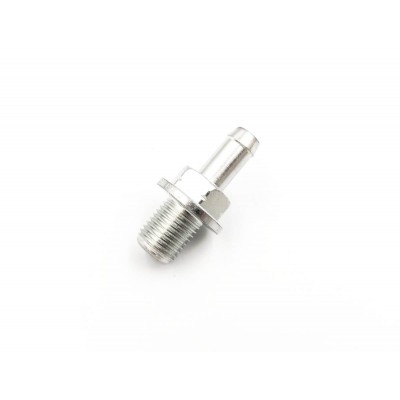
Honda OEM PCV Valve – Civic / Accord / CR-V / FR-V / NSX – R16A / R18A / R20A / JNC1 engines
- Availability: Out Of Stock
- Brand: Honda Genuine
- Product Code: 17130-PND-A01
- Weight: 0.06kg
-
135.00zł
Genuine Honda PCV Valve – 17130-PND-A01
The PCV valve (Positive Crankcase Ventilation) is a component of the crankcase ventilation system, responsible for routing blow-by gases from the crankcase back into the intake manifold. This helps the engine run cleaner, reduces oil consumption, and prevents the exhaust system from being burdened with unfiltered crankcase fumes.
OEM number 17130-PND-A01 is a genuine Honda part designed for a wide range of R-series engines as well as the JNC1 unit used in the second-generation NSX. The valve is mounted directly on the valve cover or nearby, and is connected to the intake manifold by a hose.
Applications
PCV valve 17130-PND-A01 fits the following models:
- Acura NSX (2017–2021) – JNC1
- Honda Accord 4D (2009–2015) – R20A3
- Honda Accord Tourer (2009–2015) – R20A3
- Honda Civic 3D (2007–2011) – R18A2
- Honda Civic 4D (2006–2012) – R16A1, R18A1
- Honda Civic 5D (2006–2016) – R18A2, R18Z4
- Honda Civic Tourer (2014–2017) – R18Z4
- Honda CR-V (2007–2018) – R20A2, R20A5, R20A6, R20A9
- Honda FR-V (2007–2009) – R18A1
- Honda NSX (2017–2021) – JNC1
Before ordering, always verify the VIN or part number in the Honda OEM catalog to confirm compatibility with the specific engine variant and market.
OEM Reference Numbers
- Honda OEM: 17130-PND-A01
The above number is the original Honda catalog number. It serves as a reference number – you can use it to verify part compatibility in the official Honda catalog or through an authorized dealer.
When Should the PCV Valve Be Replaced?
The PCV valve operates under harsh conditions – it is exposed to high temperatures, oil vapors, and contamination. Over time, the valve diaphragm loses flexibility or becomes blocked, which disrupts gas flow. Typical symptoms of a worn or blocked PCV valve include:
- Increased engine oil consumption with no obvious external leaks
- White or grayish smoke from the exhaust while driving
- Oil deposits inside the intake hose or on the throttle body
- Increased crankcase pressure – possible oil leaks from seals and gaskets (for example the valve cover gasket)
- Irregular engine idle
- An OBD2 fault related to the crankcase ventilation system
It is recommended to inspect the PCV valve every 60,000–80,000 km or when replacing the valve cover gasket.
Installation and Service Notes
- Before installation, inspect the hose connecting the PCV valve to the intake manifold – a cracked or hardened hose should be replaced (available separately).
- Clean the valve seat in the valve cover from oil deposits before installing the new part.
- Install the valve without excessive force – the rubber seal should provide a secure seal without tightening it with tools.
- After replacement, it is worth checking system tightness: vacuum in the PCV hose after starting a cold engine indicates proper operation of the new valve.
- If replacing the PCV valve does not eliminate increased oil consumption, inspect the piston rings and valve stem seals.
FAQ – frequently asked questions about Honda PCV valve 17130-PND-A01
How often should the PCV valve be replaced in R-series engines?
Honda does not specify a fixed replacement interval for the PCV valve, but it is generally recommended
to inspect it every 60,000–80,000 km or when replacing the valve cover gasket. During inspection,
it is easy to check whether the valve allows airflow correctly – a blocked valve will not respond
to airflow or vacuum.
Does PCV valve 17130-PND-A01 fit all R-series engines?
No – this OEM number covers specific engine variants: R16A1, R18A1, R18A2, R18Z4,
R20A2, R20A3, R20A5, R20A6, R20A9, and JNC1 (NSX). Other R-series engine variants
may require a different PCV valve part number. Always verify by OEM catalog or vehicle VIN.
Can I replace the PCV valve myself?
Yes, PCV valve replacement is one of the simpler service procedures. In most cases,
you only need to disconnect the hose, unscrew or pull out the old valve, and install the new one.
The whole process usually takes just a few minutes. It is important to inspect the PCV hose
and the valve seat in the valve cover at the same time.
Can a blocked PCV valve damage the engine?
Yes – a blocked PCV valve increases crankcase pressure. This can lead
to oil leaks through seals and gaskets (for example the valve cover gasket or crankshaft seal),
and in more severe cases to increased oil consumption and contamination of the intake system.
Regular PCV valve inspection is a simple preventive measure against more expensive repairs.
Should I replace the PCV hose together with the PCV valve?
It is definitely worth considering. The rubber PCV hose hardens, cracks, or loses
its sealing ability over time – especially in older engines. Replacing both components at the same time
is a good service practice and helps eliminate the risk of leaks in the crankcase ventilation system.
Bestsellers
89.00zł
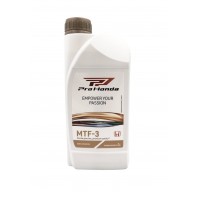
Manual Transmission Fluid Honda MTF-3 OEM 08267-99902HE / PRO 1L
Honda MTF-3 Manual Transmission Fluid Genuine Honda MTF-3 Manual Transmission Fluid is an origi..
30.00zł
NOK BH3888E Honda distributor oil seal
Distributor oil seal NOK BH3888E.Size 12,5x22,5x5 mm..
24.00zł
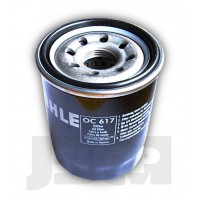
Oil filter Knecht OC617 Honda
OC617 is successor filter OC115. Is used in most gasoline engines Hondas..
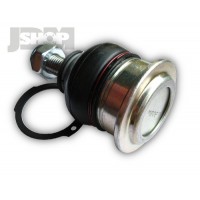
69.00zł
Ball joint upper Honda Prelude 33,4 mm
Upper Control Arm Ball Joint Honda Prelude 4/5 – 33.4 mm (prel33-5) Press-in upper control arm ..
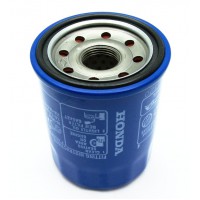
55.00zł
Oil filter Honda OEM 15400-PLM-A01
Oil filter Honda OEM 15400-PLM-A01. High quality oil filter with excellent properties of fil..
75.00zł
15400-RTA-003 Honda Oil Filter – Genuine OEM, Made in Japan
Genuine Honda 15400-RTA-003 oil filter – Made in Japan The Honda 15400-RTA-003 is a genuine Hon..
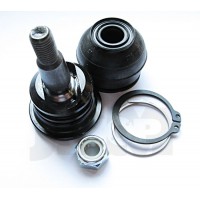
49.00zł
Uperr ball joint CTR CBHO-28 Honda Civic CRX Accord Prelude
Uperr ball joint. Producer - CTR. Diameter 35,5 mm Application: Honda Civic 4 gen 1997-1991 ..
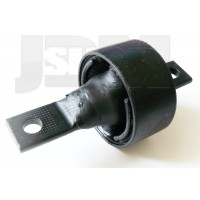
178.78zł
Genuine Honda Rear Trailing Arm Bushing 52385-SR3-003
Genuine Honda Rear Trailing Arm Bushing 52385-SR3-003 – “Candy” OEM Bushing Genuine Honda Rear Tr..