




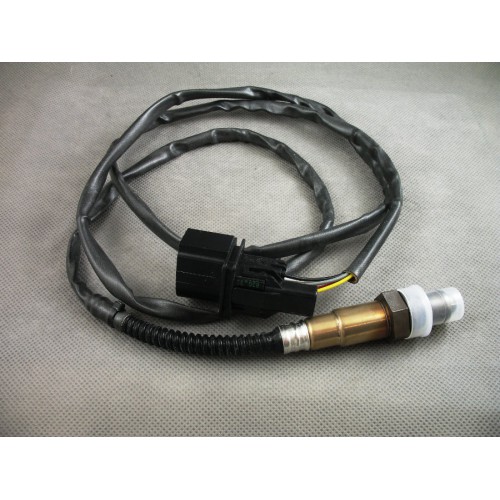
Bosch LSU 4.2 wideband lambda sensor – 0 258 007 351 for Honda tuning (replaces 0 258 007 057)
- Availability: 24h
- Brand: Bosch
- Product Code: 0 258 007 351
- Weight: 0.40kg
-
269.00zł
Bosch LSU 4.2 wideband lambda sensor – 0 258 007 351 for Honda tuning (replaces 0 258 007 057)
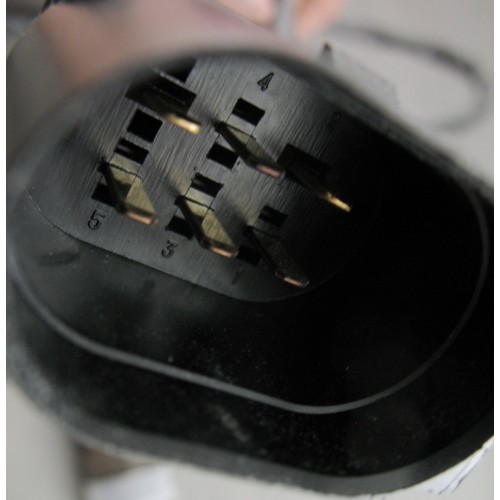
The Bosch 0 258 007 351 is a genuine Bosch LSU 4.2 wideband lambda sensor, designed for precise AFR (air-fuel ratio) monitoring in gasoline engines. It is a 5-wire sensor with an integrated heater and calibration resistor, equipped with an approx. 1510 mm harness and M18×1.5 thread. In the tuning world this is one of the most popular wideband sensors – used together with aftermarket wideband controllers and standalone ECUs, including Honda B-series, H-series, K-series, D-series and F-series builds, both NA and turbocharged.
Part number 0 258 007 351 is a development and direct replacement for the older Bosch 0 258 007 057. It uses the same LSU 4.2 technology and compatible wiring, with a longer harness. Thanks to its wide measuring range and fast light-off it allows accurate mixture control in VTEC, VTEC-E and forced induction Honda engines, where reliable AFR data is critical for safe tuning.
Applications – Honda tuning and wideband controllers
The Bosch LSU 4.2 wideband lambda sensor 0 258 007 351 is typically used as:
- an AFR sensor in Honda tuning projects – B16/B18, H22, K20/K24, D16, F20/F22 and other Honda petrol engines, NA and turbo;
- the sensing element for wideband AFR controllers and gauges that support Bosch LSU 4.2 (UEGO type systems);
- the lambda input for standalone and piggyback ECUs used in Honda builds (programmable ECUs, ECUMaster EMU series, other standalones) where a true wideband signal is required for mapping;
- AFR monitoring in track cars, K-swaps, turbo Hondas and E85 builds, where accurate mixture control is necessary to protect the engine under high load.
In a Honda, the LSU 4.2 typically works as an additional tuning sensor, not as the stock narrowband sensor. It must be connected to a dedicated wideband controller – the Bosch LSU 4.2 sensor is not designed to be wired directly to an OEM Honda ECU. A separate M18×1.5 bung is usually welded into the exhaust manifold or downpipe, and the sensor is wired to the AFR controller, which then outputs a 0–5 V or CAN signal to the ECU or logger.
Technical data & reference numbers
Key technical specifications of the Bosch 0 258 007 351 sensor:
- Type: Bosch LSU 4.2 wideband lambda sensor;
- Wiring: 5-wire sensor with integrated heater and calibration resistor;
- Cable length: approx. 1510 mm;
- Thread: M18×1.5 (standard lambda bung thread);
- Typical OEM service life (in standard conditions): up to around 250 000 km – in motorsport and high-stress use it should be treated as a regular wear item.
Bosch part numbers (reference / trade numbers):
- Bosch: 0 258 007 351, 0258007351;
- Trade / short references: 17351, LS 7351, Bosch LSU 4.2;
- Replaces: 0 258 007 057 and other LSU 4.2 sensors with shorter harness (selected VAG / Bentley / Rolls-Royce references).
These are reference numbers – there is no direct Honda OEM part number equivalent. In Honda applications the Bosch LSU 4.2 0 258 007 351 is used as an additional wideband sensor in the tuning setup rather than a factory replacement sensor.
When to replace – symptoms of wear in a tuned Honda
In a tuned Honda engine, the wideband lambda sensor often runs under harsher conditions (high exhaust gas temperatures, rich mixtures, E85), so it should be considered a consumable. Typical symptoms of a worn or failing Bosch LSU 4.2 sensor include:
- unstable AFR readings – values jumping without clear reason or “frozen” AFR despite changes in load and throttle;
- problems with controller calibration (failed auto-cal, frequent sensor errors);
- visible mismatch between ECU logs and what the AFR gauge is showing;
- black smoke from the exhaust, strong fuel smell, noticeably increased fuel consumption;
- in extreme cases – misfire under load, hesitation, and difficulty achieving stable ignition and fuel maps at high rpm and load.
If your tuning logs (for example K-Pro / Hondata together with an external AFR input) show strange AFR spikes and the fuel system is confirmed to be healthy and leak-free, inspecting the wideband sensor and its wiring should be one of the first diagnostic steps.
Installation and service tips
Correct installation of a wideband lambda sensor is crucial for measurement quality and sensor life – especially in a tuned Honda where EGT and cylinder pressure are significantly higher than stock.
- The Bosch 0 258 007 351 uses a standard M18×1.5 thread – always use a proper stainless bung welded into the exhaust. Do not apply sealants or silicone to the sensor threads.
- Avoid positioning the sensor right at the exhaust ports. Too close to the cylinder head can overheat the sensing element and shorten its service life.
- Install the sensor with a slight angle so that the tip is not at the very bottom of the pipe – this helps prevent condensation from collecting in the sensor.
- Route the harness away from the exhaust manifold, downpipe and turbine housing (especially on turbo K-swap / H-swap setups). Use heat sleeves and factory-style clips wherever possible.
- After installing a new sensor always perform the AFR controller calibration procedure (if supported by the controller) and check that idle AFR readings are stable and realistic.
- On E85 or race fuel builds accept that sensor life may be shorter. Regularly compare AFR to your maps and consider preventive replacement if you suspect the readings are drifting rich or lean.
Before tuning, make sure the exhaust system upstream of the sensor is leak-free. Any leaks that draw fresh air into the exhaust will severely distort AFR readings and may lead to a dangerous tune.
FAQ – Bosch LSU 4.2 0 258 007 351 wideband lambda sensor for Honda tuning
Q: Does Bosch 0 258 007 351 directly replace 0 258 007 057?
A: Yes. In practice 0 258 007 351 is the later LSU 4.2 sensor used as a replacement for 0 258 007 057. The sensing element and electrical concept are the same – the main difference is the longer harness (approx. 1510 mm), which makes routing the cable easier in the engine bay or under the car.
Q: Can I connect this sensor directly to a stock Honda ECU?
A: No. Factory Honda ECUs for D/B/H/K-series engines are designed for narrowband lambda sensors. The Bosch LSU 4.2 is a wideband sensor and always requires a dedicated wideband controller which then provides a processed signal (0–5 V or CAN) to the ECU or logging device.
Q: Which AFR controller should I use with this sensor?
A: Choose a controller or ECU that explicitly supports Bosch LSU 4.2. Many popular wideband kits and standalones are available in LSU 4.2 versions. Always check the manufacturer’s documentation – if the device is configured for LSU 4.2, Bosch 0 258 007 351 is a correct sensor choice.
Q: What is the difference between LSU 4.2 and LSU 4.9 – does it matter in my Honda?
A: LSU 4.9 is a newer wideband sensor design. Some controllers support both types, some only one. For your Honda project the key point is that the sensor type must match the controller setting. If your ECU or AFR controller is designed for LSU 4.2, Bosch 0 258 007 351 is the right sensor to use.
Q: Is this sensor suitable for E85 in a tuned Honda?
A: Yes, Bosch LSU 4.2 sensors are widely used on E85 builds. However, non-standard fuels and very rich mixtures can shorten wideband sensor life. On high-power, high-boost Honda engines it is good practice to treat the wideband as a consumable and replace it periodically, especially if you notice AFR drift or unstable readings.
Bestsellers
89.00zł
Manual Transmission Fluid Honda MTF-3 OEM 08267-99902HE / PRO 1L
Honda MTF-3 Manual Transmission Fluid Genuine Honda MTF-3 Manual Transmission Fluid is an origi..
30.00zł
NOK BH3888E Honda distributor oil seal
Distributor oil seal NOK BH3888E.Size 12,5x22,5x5 mm..
24.00zł
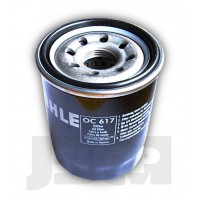
Oil filter Knecht OC617 Honda
OC617 is successor filter OC115. Is used in most gasoline engines Hondas..
69.00zł
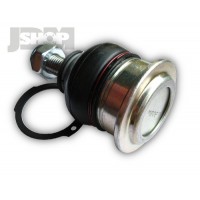
Ball joint upper Honda Prelude 33,4 mm
Upper Control Arm Ball Joint Honda Prelude 4/5 – 33.4 mm (prel33-5) Press-in upper control arm ..
55.00zł
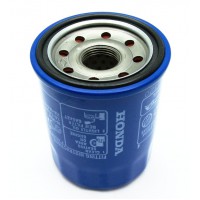
Oil filter Honda OEM 15400-PLM-A01
Oil filter Honda OEM 15400-PLM-A01. High quality oil filter with excellent properties of fil..
49.00zł
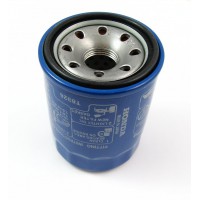
15400-RTA-003 Honda Oil Filter – Genuine OEM, Made in Japan
Genuine Honda 15400-RTA-003 oil filter – Made in Japan The Honda 15400-RTA-003 is a genuine Hon..
49.00zł
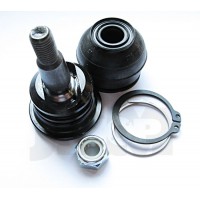
Uperr ball joint CTR CBHO-28 Honda Civic CRX Accord Prelude
Uperr ball joint. Producer - CTR. Diameter 35,5 mm Application: Honda Civic 4 gen 1997-1991 ..
178.78zł
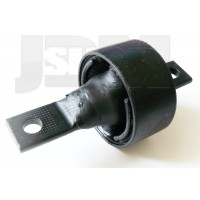
Genuine Honda Rear Trailing Arm Bushing 52385-SR3-003
Genuine Honda Rear Trailing Arm Bushing 52385-SR3-003 – “Candy” OEM Bushing Genuine Honda Rear Tr..